We ran a 3-Run benchmark on two Japanese uchiwa text-to-image prompts: a close-up pattern shot and an outdoor portrait of a person fanning. GPT Image 2 delivered the highest average quality and was usable within 3 attempts for both prompts. FLUX.2 [dev] was the most cost-effective when it succeeded, while NanoBanana 2 struggled with the close-up pattern.
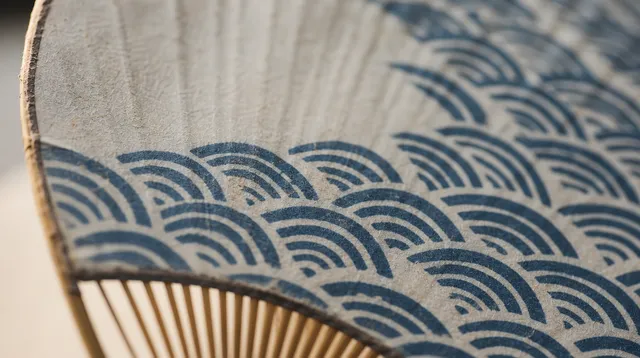
Results
| Prompt | Model | Pass@1 | Pass@3 | Usable Rate | Avg Score | Cost / Usable |
|---|---|---|---|---|---|---|
| Pattern close-up | FLUX.2 [dev] | Yes | Yes | 100% | 4.00 | $0.0120 |
| Pattern close-up | GPT Image 2 | Yes | Yes | 100% | 4.00 | $0.0800 |
| Pattern close-up | NanoBanana 2 | No | No | 0% | 2.50 | N/A |
| Outdoor person fanning | FLUX.2 [dev] | No | No | 0% | 3.20 | N/A |
| Outdoor person fanning | GPT Image 2 | No | Yes | 33% | 3.87 | $0.2400 |
| Outdoor person fanning | NanoBanana 2 | Yes | Yes | 67% | 3.87 | $0.1200 |
Key takeaways
- GPT Image 2 averaged the highest overall score across 18 runs and achieved Pass@3 on both prompts.
- FLUX.2 [dev] is the cheapest usable option ($0.012 / image) when it succeeds, making it attractive for high-volume iteration.
- NanoBanana 2 produced usable outdoor portraits but failed the close-up pattern, suggesting prompt/model fit matters strongly.
- Cost per usable output can be very different from per-image price when multiple rerolls are needed.
Verdict
For uchiwa T2I generation, GPT Image 2 is the safest all-rounder, FLUX.2 [dev] is best for cost-controlled iteration when quality is acceptable, and NanoBanana 2 should be reserved for portrait-style prompts.
Note
This is an English summary of the full Japanese benchmark article. Methodology, prompts, all outputs and cost details are documented in the original post.
Read the full article in Japanese →